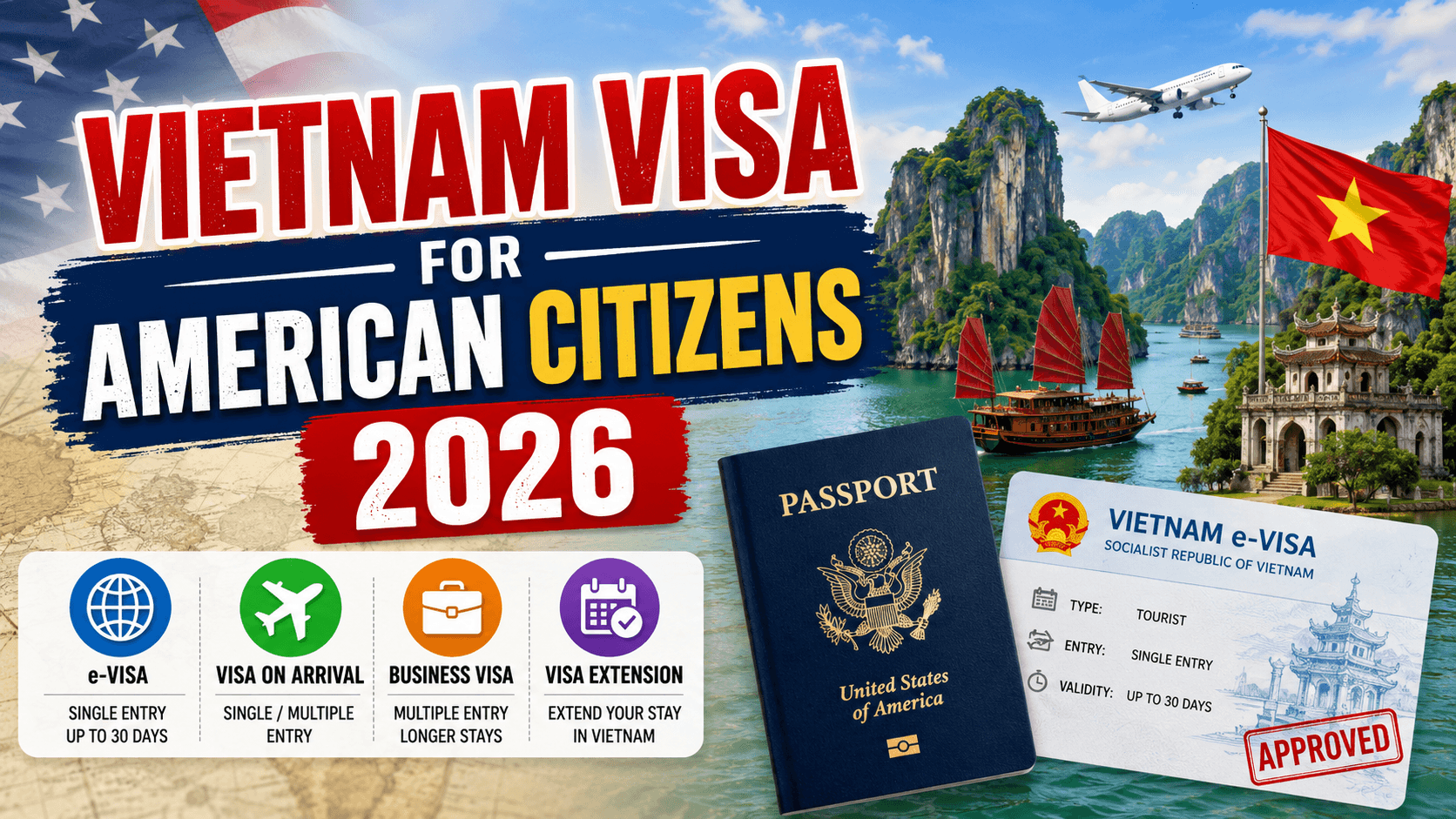
Vietnam Visa For American Citizens 2026
Latest update: Jul 15th, 2026
Table of Contents
Vietnam Visa For American Citizens 2026 involves a comprehensive understanding of the entry requirements for American travelers planning to visit Vietnam in the coming years. As travel regulations continue to evolve, it is essential for prospective travelers to stay informed about the latest updates regarding visa policies, types of visas available, and the application process. This article explores essential information necessary for American citizens seeking to navigate the complexities of their visa options for Vietnam.
Types of Vietnam Visas for American Citizens
Understanding the different types of visas available is vital for American citizens planning a trip to Vietnam. Each visa type caters to various travel purposes, from tourism to business and beyond.
Tourist Visa
A tourist visa is tailored specifically for travelers seeking leisure and exploration experiences in Vietnam. This type of visa usually permits stays ranging from one month to three months, with options for single or multiple entries.
American citizens applying for a tourist visa must provide essential documentation, including a valid passport, passport-sized photographs, and a completed visa application form. It is advisable to apply in advance to avoid last-minute complications and ensure that you receive your visa on time.
The tourist visa can also be extended in Vietnam, which is advantageous for those who find themselves wanting to stay longer than their initial visa permits. The extension process, however, can involve bureaucracy and fees, and it is often recommended to engage a local travel agency or legal service for assistance.
Business Visa
The business visa is tailored for American citizens traveling to Vietnam for professional purposes, such as attending meetings, conferences, or conducting business negotiations. A business visa typically allows for longer stays and may offer multiple-entry options.
Obtaining a business visa often involves sponsorship from a Vietnamese company or entity. American citizens must present an invitation letter from their sponsoring organization, along with the standard application requirements. Interestingly, the business visa is much sought after due to its flexibility and the opportunities it offers for professional interaction in the vibrant Vietnamese market.
As business relations between the U.S. and Vietnam continue to strengthen, it is anticipated that the demand for business visas will also increase, fostering a greater understanding and cooperation between the two countries.
Vietnam Visa Application Process for American Citizens
Navigating the Vietnam visa application process can be a daunting task, especially for first-time travelers. Understanding the detailed requirements and various application methods will significantly ease this process.
Online Application Process
The online visa application process, often referred to as e-Visa, has simplified the steps for American citizens seeking to visit Vietnam. The e-Visa allows travelers to apply for a single-entry visa valid for up to 30 days, which is particularly appealing for short-term trips.
To apply for an e-Visa, applicants need to visit the official Vietnamese government website for e-Visas. There, they will be required to fill out the application form online, provide scanned copies of required documentation such as their passport and photo, and pay an application fee using a credit or debit card.
The processing time for the e-Visa is typically around three business days, making it a convenient option for travelers who may need their visa quickly. However, it is essential to reconfirm that the online application path is still active, as regulations may change.
In-Person Application at Vietnamese Embassy
For travelers who seek a more traditional route, applying in person at a Vietnamese embassy or consulate is another option available for American citizens. This process can be slightly more intricate, but it provides an opportunity to clarify any questions directly with consular staff.
American citizens must gather required documentation, including passport photos, proof of travel itineraries, and financial evidence. After submitting their application, applicants typically wait several days for their visas to be processed.
This pathway is ideal for those wishing to obtain a multiple-entry visa or those who may need to provide additional information that could be best conveyed in person. Moreover, visiting a Vietnamese embassy offers a chance to learn more about cultural nuances, establishing a connection that could enhance the traveler's experience in Vietnam.
Visa Exemptions and Extensions for American Citizens
Visa exemptions and extensions are critical components to consider for American citizens planning their visit to Vietnam. Understanding what options are available can greatly influence the travel itinerary and plans.
Temporary Visa Exemptions
Americans are generally required to have a visa to enter Vietnam. However, specific categories of visitors, such as those participating in regional conferences, might qualify for temporary visa exemptions based on bilateral agreements. These exemptions usually have strict conditions, including the purpose of the visit and duration of stay.
Travelers should check the latest regulations to see if their specific circumstances fit within the criteria for visa exemption. It’s essential to remain updated with relevant governmental guidelines, as these agreements can evolve, often impacting travel decisions significantly.
Should a scenario arise where an exemption applies, American citizens must still ensure their purpose of travel complies with visa requirements. Even under exemptions, travelers must respect local laws and maintain transparency with Vietnamese authorities.
Visa Extensions for Longer Stays
Visa extensions provide flexibility for American citizens who may want to prolong their stay in Vietnam beyond their initial visa validity. Extensions must be requested through the Vietnam Immigration Department, and requirements may vary based on the visa type originally issued.
Applying for a visa extension usually requires submitting an extension request with explanations for the desired prolongation. Documentation such as a valid passport, current visa, and potential financial stability evidence may be necessary.
While visa extensions can be a straightforward process, it is crucial to initiate the request well ahead of the visa expiry to avoid any legal complications. Engaging local agencies familiar with the process can provide a smooth transition, ensuring American citizens can focus on enjoying their time in Vietnam.
Understanding Vietnam’s Immigration Policies
Understanding the broader context of Vietnam's immigration policies is essential for American citizens planning to visit. The policies reflect the country’s socio-political climate and its openness towards international tourism and business engagement.
Current Immigration Policies
Vietnam's immigration policies have undergone various changes in recent years, influenced by factors such as security, economic growth, and international relations. The government emphasizes strengthening the security framework while facilitating access for international tourists and business travelers.
Applying the necessary precautions while promoting tourism helps manage the flow of travelers and ensure a secure environment for residents and visitors alike. American citizens should keep informed about any forthcoming alterations to these policies, particularly as global health situations can prompt swift changes.
In an era of increasing global connectivity, keeping abreast of Vietnam’s immigration policies benefits American travelers by preparing them effectively for their journey.
Cultural Considerations and Sensitivity
Cultural considerations and respect for local customs are equally critical aspects of traveling to Vietnam. A deep appreciation for Vietnamese culture can enhance the overall travel experience and foster goodwill between American visitors and local communities.
American citizens are encouraged to familiarize themselves with local traditions, etiquette, and social norms before embarking on their journey. Such awareness not only demonstrates respect but also helps to cultivate positive interactions with Vietnamese citizens.
Moreover, as globalization continues to influence cross-cultural exchanges, fostering enduring relationships between American travelers and Vietnamese residents is vital. Encouraging an atmosphere of cultural sensitivity can lead to deeper insights into Vietnam's rich heritage while ensuring enjoyable interactions throughout the visit.
Conclusion
In navigating the landscape of Vietnam visa requirements, American citizens can empower themselves with knowledge regarding various visa types, application processes, exemptions, and cultural expectations. Staying informed about immigration policies and understanding local customs will foster a rewarding journey filled with exploration and cultural exchange. Through careful preparation and appreciation for Vietnam's uniqueness, American travelers can ensure their visit is both enjoyable and enriching in 2026 and beyond.
- Categories:
- Blog

STANLEY HO
Over the past 23 years in the travel service industry, the growth and success of TRANSOCEAN have stemmed not only from the dedication of our well-trained, enthusiastic, and customer-oriented staff, but also from the exceptional leadership of our Founder and CEO, Mr. STANLEY HO. With more than 20 years of experience in the travel and tourism sector, Mr. STANLEY HO possesses profound knowledge of the market, customer behavior, and modern travel trends. His strategic vision has guided the company toward sustainable growth while maintaining a strong commitment to service quality.