
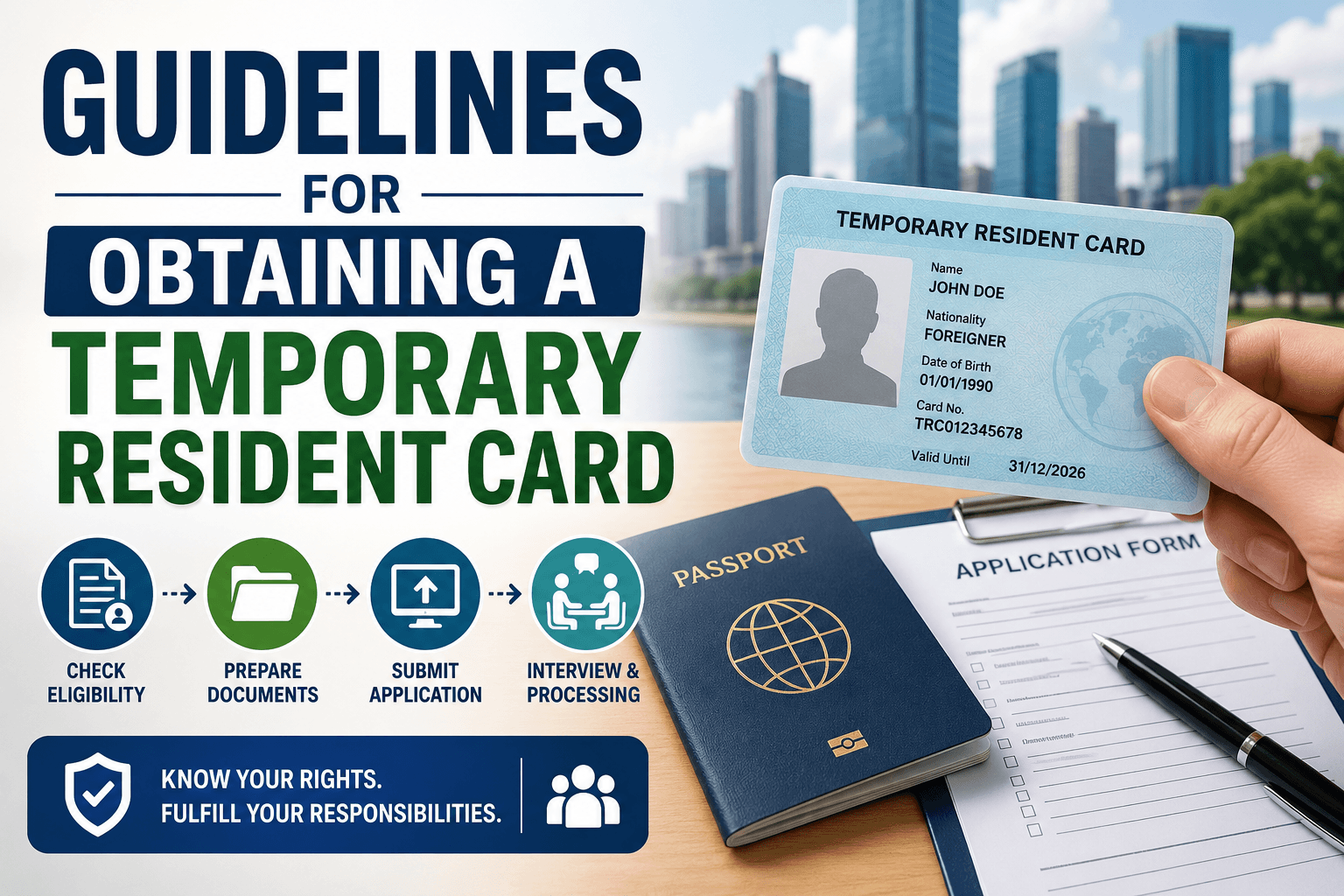
Guidelines for Obtaining a Temporary Resident Card
Latest update: Jul 16th, 2026
Table of Contents
Foreigners Get Temporary Resident Card, a process that many find daunting yet vital for their stay in a foreign country. Temporary residence permits are an essential component for individuals wishing to reside in a different nation for an extended period. This article aims to provide a comprehensive guide through the process of obtaining a temporary resident card, making it easier for individuals to navigate through the various requirements and steps involved.
Understanding the Temporary Resident Card
Acquiring a temporary resident card is critical for foreigners who require legal status to live and work in a new country. Understanding the different types of temporary residence permits, their purposes, and the basic criteria for eligibility is essential for anyone thinking about applying.
Types of Temporary Resident Cards
Temporary resident cards vary greatly by country, as each nation has its unique processes and criteria. The main types usually include work permits, student visas, and family reunification permits.
Work permits allow foreigners to engage in employment, making them invaluable for individuals looking to build their careers abroad.
Student visas, on the other hand, cater to those who aim to pursue educational opportunities. These permits often come with specific conditions regarding enrollment and attendance, reflecting the host nation's education policies.
Family reunification permits allow qualified individuals to join family members already residing legally in the host country. Each type of temporary resident card is tailored to meet specific needs, which emphasizes the importance of selecting the right one based on individual circumstances.
Eligibility Criteria for Temporary Resident Cards
Before beginning the application process, it is crucial to assess whether you meet the eligibility criteria. Generally, these criteria can include proof of financial stability, valid health insurance, and a clean criminal record.
Proof of financial stability typically involves providing bank statements or employment contracts that demonstrate your ability to support yourself.
Valid health insurance is another key requirement. Countries often mandate that applicants possess a health insurance policy that meets their specific legal standards to ensure medical expenses will not fall back on the public health system.
A clean criminal record is crucial for assessing an applicant's suitability for temporary residence. Background checks are typically performed, and any past criminal charges could seriously impact your application.
The Application Process for a Temporary Resident Card
Navigating the application process may be one of the most challenging aspects for many foreigners seeking their temporary resident card. Understanding the steps involved, the necessary documentation, and potential pitfalls can significantly impact the success of your application.
Gathering Required Documentation
Documentation is a critical component of the application process. Missing or incorrect paperwork can lead to application delays or denials.
Commonly required documents include identification, proof of financial means, photographs, and any relevant educational or professional credentials.
Identifying and procuring these documents well in advance can help prepare you for what lies ahead. Notably, some documents may require translation or certification to meet the host country's legal standards.
Photographs must typically meet specific requirements as well, including dimension specifications and background colors.
Submitting the Application
Once you've gathered your documents, the next step involves actually submitting your application. This step may be more complex than it initially appears and can vary widely by country.
Some nations allow for online submission through dedicated immigration portals, while others may require applicants to submit their documents in person. Some countries may also charge an application fee, adding a financial consideration to this process.
Make sure to double-check everything before submission, ensuring that all necessary forms are completed accurately. This includes reviewing the latest rules on application fees and processing times, which could affect your overall timeline.
Understanding Processing Times and Interviews
Once your application is submitted, the waiting game begins. Understanding the general processing times in your host country can help set realistic expectations.
Reactions to your application may range from immediate acceptance to extended periods of waiting. During this time, some countries may request additional information or require a personal interview.
Personal interviews generally seek to clarify details regarding your application and assess your genuine intention to reside in the country. It is wise to prepare for potential questions and know pertinent details about your area of residence and future plans.
Rights and Responsibilities of Temporary Residents
Obtaining a temporary resident card is a monumental step in your journey as a foreigner in a new country. However, it's equally essential to understand the rights and responsibilities that come with this status.
Rights Granted by Temporary Resident Status
Temporary residents often enjoy various rights during their stay, such as the ability to work, access to social services, and the opportunity to study.
These rights may vary significantly based on the specific type of temporary resident card you obtain. For example, work permits may require holders to operate within a limited scope or specific industry, while students may have restrictions on working hours.
Furthermore, understanding your rights for social services, such as healthcare access and educational enrollment, is vital for a smooth transition to life in a new country. Being proactive about these rights ensures that you can leverage available resources for a better living experience.
Responsibilities of Temporary Residents
While rights are critical, responsibilities also play a crucial role in your status as a temporary resident. Most countries expect residents to follow local laws and regulations, pay taxes, and maintain valid documentation while residing in their borders.
Legal compliance is non-negotiable. Violating local laws can lead to severe repercussions, including deportation. Additionally, maintaining your residency status requires periodic updates, particularly regarding changes in your employment, marital status, or address.
Budgeting and paying taxes might also be necessary, depending on the country’s requirements. Staying informed and compliant prevents unexpected legal challenges down the road and ensures a more stable residency experience.
Renewing Your Temporary Resident Card
As your time in a foreign country progresses, understanding the renewal process for your temporary resident card becomes increasingly significant. Knowing when and how to renew your status can spare you from potential legal issues.
When to Begin the Renewal Process
Typically, temporary resident cards come with expiration dates, requiring holders to apply for renewal before that time arrives.
It is advisable to start the renewal process several months in advance to account for processing times and any unforeseen complications.
Monitoring the expiration date of your current card while remaining informed about the necessary documentation for renewal is vital for timely action.
Documentation for Renewal
Most countries will require a similar set of documents for renewal as they did during the initial application. This often includes proof of income, updated health insurance, and identification.
It is crucial to check if there have been any changes in the requirements since your initial application, as immigration policies may evolve.
Being organized and meticulous with the documentation will help ensure a much smoother renewal process. Note that late renewals can lead to penalties or loss of residency status.
Potential Challenges During Renewal
As with the initial application, challenges may arise during the renewal process. Resolved issues from prior applications may resurface, or new requirements may introduce unexpected hurdles.
Maintaining transparency and open communication with immigration authorities can help address these challenges more effectively. Do not hesitate to seek legal advice if complications arise or if you think your situation warrants expert guidance.
Conclusion
Obtaining a temporary resident card is a multi-faceted process that often requires careful preparation, documentation, and a deep understanding of both rights and responsibilities. By understanding the various types of permits available, the application steps involved, and the renewal processes outlined, you can navigate this journey more confidently and prepare for what lies ahead. Whether you are in search of work opportunities, education, or family reunification, the ability for foreigners to get a temporary resident card can open doors to a world of possibilities, enriching your experiences and contributing to your personal growth.
- Categories:
- Blog

STANLEY HO
Over the past 23 years in the travel service industry, the growth and success of TRANSOCEAN have stemmed not only from the dedication of our well-trained, enthusiastic, and customer-oriented staff, but also from the exceptional leadership of our Founder and CEO, Mr. STANLEY HO. With more than 20 years of experience in the travel and tourism sector, Mr. STANLEY HO possesses profound knowledge of the market, customer behavior, and modern travel trends. His strategic vision has guided the company toward sustainable growth while maintaining a strong commitment to service quality.