
Vietnam Visa for Andorran Citizens
Table of Contents
- Vietnam E-Visa Requirements for Andorran Citizens
- Denied Boarding at BCN or TLS: What Happens When Your Visa Isn't Ready
- The Andorran Passport Trap: Name Formatting Errors That Kill Applications
- Skip the Queue: VIP Fast-Track at Vietnam's Airports
- How to Apply for Your Vietnam E-Visa in 2026
- Frequently Asked Questions
Reviewed by: Stanley Ho | Last Updated: May 2026
If you're looking into the Vietnam visa for Andorran citizens in 2026, you've already cleared the first hurdle — knowing that a visa is required and that the rules have changed significantly in recent years. Andorra is one of Europe's most fascinating microstates, perched high in the Pyrenees between France and Spain, with a passport that carries surprisingly strong travel freedom. Vietnam, however, is not on the visa-free list. Every Andorran national needs an E-visa to enter, and sorting that out before you travel is non-negotiable.
Here's what makes the Andorran situation slightly more interesting than most: there is no international airport inside Andorra. The principality is 468 square kilometres of mountain terrain — beautiful, but flat runways are simply not on offer. That means when you're heading to Vietnam, your journey begins at one of the nearby international airports: Barcelona El Prat (BCN), about 200 km from Andorra la Vella, or Toulouse-Blagnac (TLS), roughly 195 km to the north. Your check-in experience and document requirements start there, not in Andorra itself.
Vietnam in 2026 is extraordinary — Ha Long Bay, the ancient town of Hoi An, the chaotic beauty of Ho Chi Minh City's streets, the cool mountain air of Sa Pa. For Andorrans making the journey, the E-visa process is streamlined and entirely online. Let me walk you through everything.
Vietnam E-Visa Requirements for Andorran Citizens
The 90-day Vietnam E-visa is the standard entry method for Andorran passport holders in 2026. The old Visa on Arrival approval letter system — which used to require you to secure a letter from an agency before boarding — is completely dead. Do not use it, do not trust anyone offering it. The E-visa is the only route for tourists and short-stay visitors.
Here is what you need to prepare before starting the application:
- Valid Andorran passport with at least 6 months of remaining validity beyond your intended departure date from Vietnam
- At least 2 blank visa pages in your passport
- Digital passport photo — recent, clear white background, full face visible
- Clear scan of your passport bio page — all text must be legible, no glare
- Valid email address — your approval document arrives by email
- Credit or debit card — to pay the government fee online
- Confirmed travel dates — the portal requires your planned entry and exit dates
Processing under the standard option takes 3 business days. The fee is USD 25 for single entry, USD 50 for multiple entry. Both fees are non-refundable. If your plans have you crossing into Laos or Cambodia and returning to Vietnam, choose multiple entry.
Denied Boarding at BCN or TLS: What Happens When Your Visa Isn't Ready
This scenario plays out at airports all over Europe, and Barcelona El Prat (BCN) and Toulouse-Blagnac (TLS) — the two most common departure points for Andorrans heading to Vietnam — are no exception. You've made the drive from Andorra la Vella, you've checked your bags, you're at the counter. The agent pulls up your booking and asks for your Vietnam E-visa. You open your email. The approval isn't there yet. Or worse — it's there, but the name doesn't match your passport.
Three hours to departure. The next flight isn't for two days.
Andorran travelers heading to Vietnam typically route through hubs like Dubai (DXB), Doha (DOH), or Kuala Lumpur (KUL) before arriving at Noi Bai (HAN) in Hanoi or Tan Son Nhat (SGN) in Ho Chi Minh City. Each stop involves another document check. A name discrepancy that airline staff miss at BCN will almost certainly be flagged at the transit hub — and then you're stranded mid-journey with no valid visa to present.
The single most common cause isn't an outright rejection. It's an E-visa approved with a small but fatal name error — a transposed letter, a missing middle name, or a formatting mismatch between what the applicant typed and what actually appears on their Andorran passport.
💡 Expert Insight from Stanley Ho: "Over my 23+ years handling travel logistics and Vietnam visa services, the most frequent disruption occurs at the check-in desk due to simple application formatting errors. If you are stuck at the airport and denied boarding, don't panic — our emergency team can secure a new E-visa clearance through priority channels within hours, saving your flight."
Our Super Urgent Visa Service processes emergency E-visa approvals in 2 to 4 hours. If you are sitting at BCN or TLS with a boarding call in three hours and a visa problem, this is the service that fixes it. Call immediately — every minute matters in an airport crisis.
The Andorran Passport Trap: Name Formatting Errors That Kill Applications
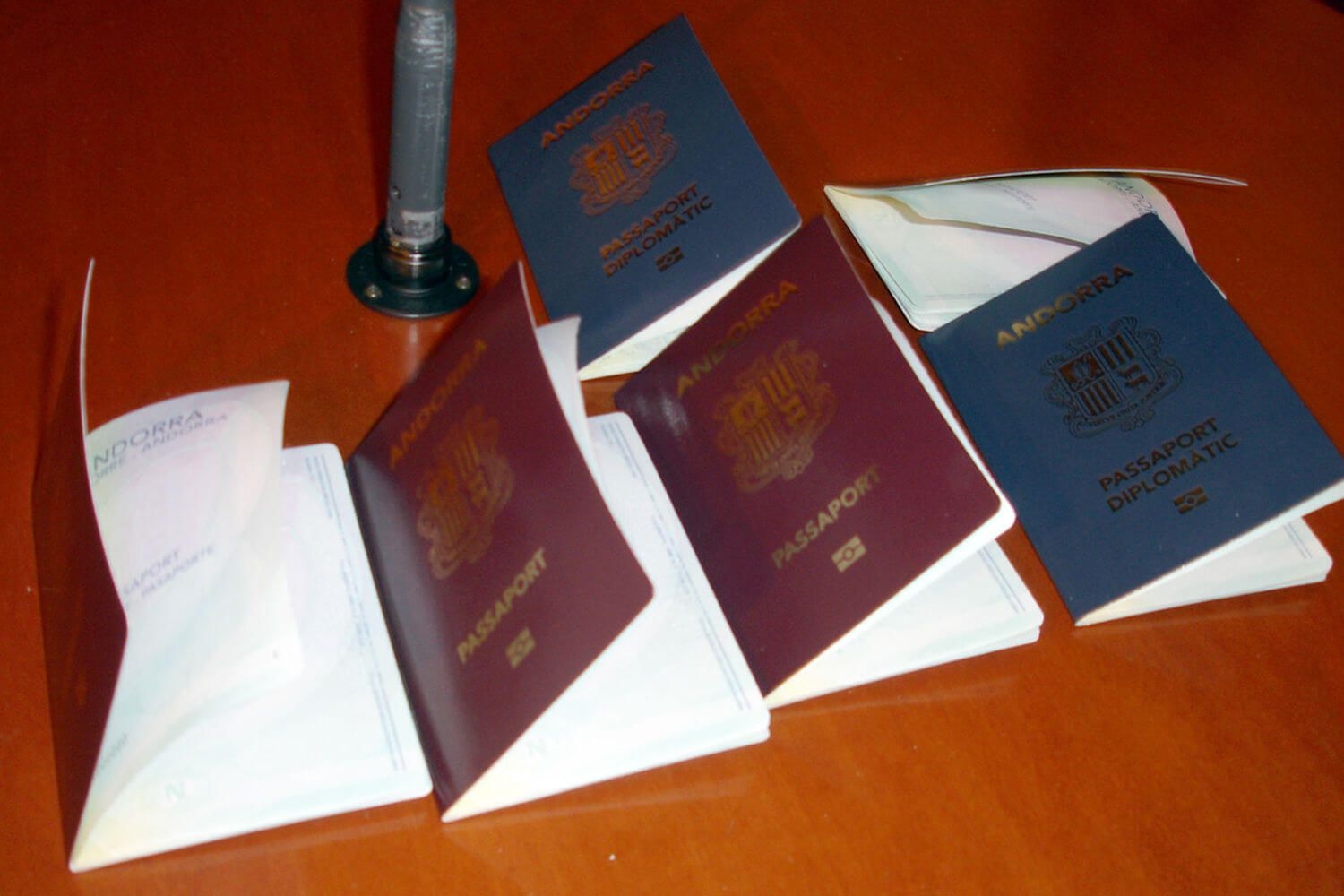
Andorran passports follow Catalan and Spanish naming conventions, and these have specific quirks that consistently trip up the Vietnam E-visa portal.
Diacritical characters in Catalan names. Andorra's official language is Catalan, and Catalan uses characters such as à, è, é, í, ï, ó, ò, ú, ü, and the distinctive l·l (geminated L). The Vietnam E-visa portal does not accept these characters — it is ASCII only. You must romanize your name into plain Latin characters before entering it. Do not copy-paste from your passport scan; type it manually, stripping all accents. For example: "Núria" becomes "Nuria", "Jofré" becomes "Jofre", "Llull" becomes "Llull" (geminated L drops its dot but the letters remain).
Spanish double surnames. Many Andorrans carry compound surnames — one from the father's family, one from the mother's. "Garcia Fernandez", for instance. The portal has separate Surname and Given Name fields. In Spain and Andorra, both paternal and maternal surnames appear in the family name field. Enter the full compound surname in the Surname field — do not split it or drop the second surname. The name must match your passport exactly in structure, even if accents are removed.
French-influenced names. Andorra also has a significant French-speaking population and many residents carry French-origin names. French diacritics — ê, â, î, ô, û, ç, ë, ï, ü — must also be stripped and romanized the same way. "François" becomes "Francois", "Hélène" becomes "Helene".
The Catalan "ny" digraph. The Catalan equivalent of the Spanish "ñ" is the digraph "ny" — as in "Montanya". This does not require special handling but can confuse people who are used to Spanish conventions. Keep "ny" as written in your passport; do not convert it to "ñ".
One letter wrong, and Vietnam's immigration system will reject you at the counter. The E-visa is matched electronically against your passport the moment you present it. There is zero tolerance for discrepancy.
Skip the Queue: VIP Fast-Track at Vietnam's Airports
After a long-haul journey from Barcelona or Toulouse — likely 14 to 18 hours including connections — arriving at Tan Son Nhat (SGN) or Noi Bai (HAN) and facing a standard immigration queue of 45 to 90 minutes is a bleak way to start a trip.
The VIP Airport Fast-Track service at Vietnam's major international airports eliminates this entirely. A personal concierge meets you at the aircraft gate — before you reach the general arrival hall — and escorts you through a dedicated priority immigration lane. Your documents are processed ahead of the queue, your entry stamp is applied, and you're through while everyone else is still waiting to shuffle forward.
This service operates at Noi Bai International Airport (HAN) in Hanoi, Tan Son Nhat International Airport (SGN) in Ho Chi Minh City, and Da Nang International Airport (DAD). For travelers heading to Nha Trang or the Central Coast, it's available at Cam Ranh (CXR), and for Phu Quoc island, at Phu Quoc International Airport (PQC).
For Andorrans flying from BCN or TLS and routing through a long transit, this isn't a luxury. It's a sensible decision.
How to Apply for Your Vietnam E-Visa in 2026
The application is fully online. There are no embassy visits, no courier services, no approval letters to print and wave at a check-in counter — that old workflow is gone. Here is the complete step-by-step:
Step 1 — Access the portal. Use the official Vietnam Immigration Department E-visa portal, or apply through a trusted agency like VisaOnlineVietnam, which adds an error-checking layer — particularly valuable given the name formatting issues outlined above.
Step 2 — Complete your personal details. Work from your passport, not from memory. Every field — name, date of birth, passport number, nationality, expiry date — must match your document character for character. Remove all diacritical marks as described in the passport section above.
Step 3 — Upload your documents. Submit a clear scan of your passport bio page and a recent photo. If your passport scan is dark or blurry, re-scan before uploading. The system performs an automatic read of the data; a poor scan leads to auto-fill errors that you may not catch.
Step 4 — Select entry type and dates. Single entry (USD 25) for straightforward trips. Multiple entry (USD 50) if you plan to leave Vietnam and return — common for itineraries combining Vietnam with Cambodia, Laos, or Thailand.
Step 5 — Pay the fee. Paid by card through the portal. Non-refundable.
Step 6 — Receive your approval by email. Standard processing: 3 business days. Urgent processing: 2 to 4 hours. Save the document in your email, download a copy to your phone, and optionally print one. Vietnam's immigration accepts both digital and printed copies — having both is wise when you're in transit through multiple airports.
Frequently Asked Questions
Can Andorran citizens get a Vietnam visa on arrival in 2026?
The old Visa on Arrival approval letter system no longer exists as a valid tourist entry method. It has been completely discontinued. The 90-day E-visa applied online is the only legitimate route for Andorran tourists visiting Vietnam in 2026. If any service is offering you a "VOA letter," walk away — that product is obsolete.
How long can Andorran passport holders stay in Vietnam on the E-visa?
The Vietnam E-visa for Andorran citizens allows a maximum stay of 90 days per entry. This is a significant improvement over older visa categories that capped tourist stays at 30 days. If you want to stay beyond 90 days, you'll need to apply for a visa extension through the Vietnam Immigration Department — begin that process at least two weeks before your current visa expires.
My Andorran name has Catalan accents. How do I handle them in the E-visa application?
Remove all accents and enter plain romanized characters. The portal is ASCII only. Strip every diacritic — à becomes a, é becomes e, ï becomes i, and so on. Keep the structure of your name (including compound surnames) exactly as it appears on your passport, just without the special characters. After completing the form, compare every field against your passport line by line before submitting.
Is there a Vietnamese embassy in Andorra I can visit instead?
No. There is no Vietnamese embassy or consulate in Andorra. The nearest Vietnamese diplomatic missions are in France (Paris) and Spain (Madrid). Andorran citizens can visit either of those if they prefer an in-person application, but the online E-visa is far faster and more convenient for most travelers.
Is the Vietnam E-visa accepted at all entry points?
Yes. As of 2026, the E-visa is valid at all of Vietnam's international entry points — airports, land borders, and sea ports. Most Andorran travelers will be arriving by air, either at Noi Bai (HAN) in Hanoi or Tan Son Nhat (SGN) in Ho Chi Minh City. Both handle Andorran passport holders routinely.

STANLEY HO
Over the past 23 years in the travel service industry, the growth and success of TRANSOCEAN have stemmed not only from the dedication of our well-trained, enthusiastic, and customer-oriented staff, but also from the exceptional leadership of our Founder and CEO, Mr. STANLEY HO. With more than 20 years of experience in the travel and tourism sector, Mr. STANLEY HO possesses profound knowledge of the market, customer behavior, and modern travel trends. His strategic vision has guided the company toward sustainable growth while maintaining a strong commitment to service quality.